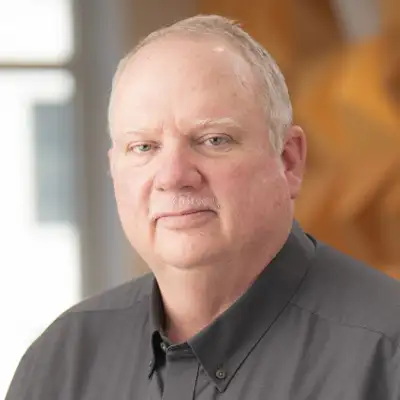
Leadership: Small Lessons, Big Impact ft. Matt Moran
Introduction for me. I'm director of technology operations at Star Bank, about three and a half years. I did twenty seven years in IT consulting, eleven years in the Air Force. Thank you. Eight years in Japan, and I was an Aircraft Electro Environmental Systems Master Fit Mission.
Matt Moran:I've been married for forty four years this month, two two daughters, and I grew up in Africa. My last five years of school, eighth, ninth, tenth, eleventh, twelfth, were done in three countries, two continents, two states. So I moved a lot. When while growing up, we had our cats and dogs, but I also had a pet monkey. That's part of me.
Matt Moran:It's not really that, but that's the kind of money that it was. So when I was asked to speak, you know, I first felt a little bit like a pretender. I feel like this leadership journey, it never ends. And it could be humbling at times, and I think no one actually masters it where you where you achieve you you arrive. So as I go through this talk, I have to tell you, I did not collaborate with Jen at all on any of this, but there's gonna be a lot of parallels.
Matt Moran:So I think that also speaks to leadership. We've seen it hatched out in books and speeches and, you know, TED talks and all this stuff. And all the data's out there and it's in our mind intellectually. And I think what these bring value to is they help us flip that switch from intellectual to behavior and where we actually make a change in in how we we approach leadership. So I'm gonna tell you today, I'm gonna just talk about my leadership story and some of the little lessons along the way and one big mistake.
Matt Moran:And I hope ensuring will help someone else avoid it. So I boiled this down to my nine small lessons that impacted me highly as a leader. Of course, there's many, many more lessons than than nine, but these are the ones that I've chosen to go through. So my first shot at leadership was Wendy's, And we all done our food, fast food. It was just one of those things.
Matt Moran:Another life seems like a lifetime away today. So this is where I learned about uniqueness of people. And what motivates and makes someone tick, everybody's different. And why is that? Well, they're all there for different reasons.
Matt Moran:Some people were at Wendy's because mom and dad told them they had to have a job. Some people were at Wendy's because they want to make the money to be more independent from mom and dad. Some people were there because they worked three jobs just to make ends meet because they had a family. Some people were there because they're bored and they just needed something to do. And some people were there and these people, they're the special people.
Matt Moran:They're there because they love serving people and they just saw this as a big step in their career to learn to help people. And we need more of those people. But everybody has unique perspective and and each reason of them is different to to be there. So, to illustrate that one time we were super busy and we I had this he was the real guy and and this is after I became a manager and the stack of all the trays were in the back in the sink and we didn't have any trays to give out. So I challenged him.
Matt Moran:I said Dave, don't know you could do those trays in twenty minutes. And he took that challenge and he was back there washing, rinsing, drying, stacking and he got them done thirteen minutes. And so I go wow, that's that challenge really worked. So a few weeks later we weren't that busy, but I did the same thing with a high school girl who was working. So I bet you couldn't get those trades done in twenty minutes and she looked and goes, yeah, it's gonna take me at least half an hour.
Matt Moran:So at that point, I realized I'm 19 at the time. I'm just a teenager myself. I'm 19 at the time. I'm leaving people in their twenties, thirties, forties and even fifties. And so it just really hit me.
Matt Moran:You can't always use a challenge because I was an athlete too. So I responded to a challenge. Still do. And I double dog dare sometimes you have to encourage everybody's gonna need something a little bit different from you. So that was my first lessons.
Matt Moran:People are unique. You can't treat them all the same and expect great results from each of them. You got to be fair, but each person needs a little something different from you. So from there, this was in Fort Wayne and from there I didn't think Wendy's was a long term solution, so I started looking for another job. My parents had moved down to the Alexandria, Virginia area and they sent us the help wanted ads.
Matt Moran:And this was back in the day, that's how you got jobs, you look to help wanted ads. In Fort Wayne, help wanted ads were six pages long. They sent us a newspaper from Alexandria that was 39 pages. I said, oh, I can find a job there. So off we moved to Alexandria, Virginia and I got a job with Wells Fargo Guard Investigative Services.
Matt Moran:So I I got a two week temporary job guards guarding a limestone mine out in West Virginia, and It paid great money. I mean if I recall was $5 an hour, you know. And so after two weeks, I applied for a permanent job and was immediately hired not as a guard, but as a supervisor. Field inspector, they called it. So I was feeling good about this.
Matt Moran:Like, wow, I jumped in position and went straight to leadership. I found out it wasn't due to my great qualities, but rather the lack of quality of the guards they had been hiring. So making an applicant that didn't have a rap sheet, promotion. That was it. So I was 22 at the time.
Matt Moran:But the lesson I learned here was more about self than leadership per se. And it was just in understanding what your limits are, physical, mental limits. When do you need to pause and regroup to remain an effective leader? So part of my job was I have to go around to all the different guards in the city and we did Washington DC mostly. So I'm going to the job sites, checking in on guards and, you know, making sure they're on post and that they showed up and they whatever.
Matt Moran:If I had to fire a guard or if someone didn't show up, I'd sit the post. So it was a fairly common occurrence. Nope. Who they were hiring. And like one guard I had to fire because because I'm pounding on the door where he's supposed to be letting people in the door and pounding door and no one answering.
Matt Moran:The client comes out from the front door and says, oh, he's sleeping. He's a guard. Anyway, so he had to go. And then another guy, I went to his post, he wasn't there and client comes down the hall and goes, oh, he's in the break room, which was okay. You can run-in the break room, get a soda or whatever.
Matt Moran:Well, I go to the break room to talk to the guy and he is stuck in the vending machine with his hand up trying to steal. He's bleeding all over the place because he can't pull his hand out. So we had to get him out and of course, had to sit his post. So it wasn't those two those times, but other times like it, I just worked a twenty five hour shift. And I got home, had dinner with the family, just getting ready for bed, and my pager goes and say, we need you.
Matt Moran:So I said, I'm young, I'm 22, I'm okay. So I go in, I work another twenty five hour shift. So I've been up for fifty two hours, I get home, I go to bed. In about three hour or two hours into my sleep, my pager, because those were pager days, starts going off. And it finally woke me up and they said we need to.
Matt Moran:I said I can't, I'm done. So the badge on your desk and I'll the car back to you tomorrow. When I got up to take that car back in and my badge in, the car was in the front yard, almost at the front door with the door hanging open. And I think the only reason it wasn't running is because I need the keys to let myself in. But that's when I, you know, realized you can't be effective if you're too tired and you need to know when enough is enough.
Matt Moran:So at the time I started talking to air force and marine recruit recruiters and so I took a temporary job with Beacons Warehouse. And again, after two days I was promoted to foreman. And I'm like, what? But the only reason is I didn't smoke weed. I didn't have a Rhapsody.
Matt Moran:I showed up on time two days in a row and I didn't try to false find one time sheet. So that meant immediate promotion. And they didn't monitor time cards and they didn't know who was trying to cheat them Cause they told me these two guys that you're working with, they try to cheat us every day. So my lessons learned there is know your limits, can't be effective leader if you don't, and maintain your integrity even when you think others aren't watching. So any veterans in here besides a mic?
Matt Moran:Happy Veterans Day, and thank you for your service. So I was in the Air Force for eleven years. After talking with the Air Force and Marine recruiters, the Marine was not happy about my choice. But I have a twin brother and he's in the marine corps and so talking with him, I decided to join the air force. They're a lot more family friendly.
Matt Moran:And so I joined the air force and this is what I got to work on. These are the five airframe that I got to work on. SR 71, U two, KC one thirty five tankers, T 30 eight's and F fifteen's. So in the time I was in, those were the stuff I had lots of fun working on. So what I learned there was take care of your people, share your vision, don't hoard your knowledge, make sure your team knows what you know.
Matt Moran:And and we talked about this many times and I know, I think Matt you talked about this, don't be the smart guy in the room. You're in the wrong room. Initially in Air Force, there was limited leadership opportunities. It's really defined by rank. So as you increase your rank, then you start getting more and more responsibilities.
Matt Moran:And what I learned is you can pull rank and they have to do it. Or you can get them to buy into your method and you don't have to lean on pull and rank. And that's what I found to be way more effective. If someone does something because they have to do it, they do that thing. If someone does it because they wanna do it, they do that thing and they go the extra mile almost every time.
Matt Moran:Maybe they go the extra 10 miles. You you you never know. So I led a swing shift. This was when I was working at fifteens and we had about eight people on swing shift and day shift had 23 people. We outperformed day shift because of the of the team that we built there.
Matt Moran:And when there was a major problem, day shift only had two people. I never had to ask for volunteers to stay to help mid shift. I had to choose between people who said they would stay because it was never never a question. But when we were slow on nights, I'd cut people loose. In Okinawa, we didn't have Monday night football because by the time Monday night football was played here, it was noon on Tuesday there.
Matt Moran:So we had Tuesday night football and it was a big deal because it would be announced on the radio and we turned the radios off on Tuesday because no one wanna hear the score and if you spill the score, you might get run a flagpole by your feet because it was that big of a deal. So I tried to cut people loose to watch football night, just whatever, and they always reciprocate it. And I realize you take care of your people and they'll take care of you and the mission. The military is very mission driven, but they have different approaches. So as I mentioned, I have a twin brother who was a marine.
Matt Moran:So we compare notes and there might be a little bit of inner service of our rivalry there. But even though he's not here to support himself, we mutually agree that obviously the Air Force is spirit of service. Right? I mean, obviously. And he doesn't take my word that he thinks so too.
Matt Moran:I mean, he's now a contractor for the space force. But wait wait, that came from the air force. Right. He must think that. So anyway, the the services really approach and this is gonna be oversimplified, but they approach things differently.
Matt Moran:So the marine corps, and I'm gonna use them as an example, they approach mission first. So they fund the mission. If there's anything left over, they throw it into the people programs and housing, child halls and that type of stuff. The Air Force takes a different approach. So they build nicer facilities, better housing, better town halls, better recreational programs.
Matt Moran:And we had other branches from the service come to our base all the time to enjoy these. Great. Air Force always had the best. Hands up. So what happens is when the marines go and say, hey, we want some more people more money for the people program.
Matt Moran:Congress is like, no. When the air force who already spent all their money goes in and says, we need more money to support national security flyer missions, they get they get the check. So it's a little again oversimplified, but the Air Force will learn if you take care of your people, you'll track the quality people they need for their mission, retain them, and they'll take care of the mission. Since each service is looking for different qualities in their people, they have different approaches. For instance, my twin brother, he did two tours with an embassy guard and two tier tours in Iraq.
Matt Moran:You put an m 60 or an an Uzi in his hands, I he gets a big old grin. He's a happy guy. But just the difference, it reminds me of the story on how the services attract different type of people. And it goes something like, what does an army guy do if he's he finds a scorpion in his tent? Well, he stomps on it and kicks it out out and yells at it as he kicks it out and out into the dirt outside.
Matt Moran:What does a marine do? He kicks it, he stomps on it, kicks it out, yells at it, runs outside, stomps on it again, and then comes back into his tent. What does what does the special forces guy do? He picks it by tail and eats it. Throws the tail out.
Matt Moran:What's the air force guy do? He calls room service and says, why is there a tent in my room? So it it they just approach things differently because they're trying to attract different types of people. Working for a highly classified organization like I did with with the SR seventy one, was very rewarding. It was an organization that practiced good leadership from top to bottom.
Matt Moran:It was an environment of trust and team. And the military is very team oriented, but a unit that is 90% operational in peacetime has a different level of interdependency and job satisfaction because you're actually flying operational sorties all the time during peace because you want to maintain the peace. We retired the SR-seven 100 for the first time in 1990 and that's when I moved over to the tanker squadron. And some lessons I learned there were I don't know if I'm supposed to switch slides or not. One of the lessons I learned there was what not to do.
Matt Moran:So I had a supervisor who he felt the best way he could become the leader that everybody wanted was to hoard his knowledge. So he did not inform his team When someone came into the shop and needed something, they had to go to him. And he thought this submitted him as an invaluable leader when it actually did the exact opposite. So that's when I realized I never wanted to be a knowledgeable hoarder, but I always keep my teams fully informed, trained, and thinking about the whys and not just the whats. So here, treat your people well and they will want to help you.
Matt Moran:Don't hoard your knowledge. Try not to be the smartest guy in the room. Hire and develop your team so you aren't. And there'll be more on hiring in a few minutes. So the next phase of my journey was Death and Storm.
Matt Moran:And when Death and Storm kicked off, my whole shop, except for three of us, got deployed to Saudi. And I was stuck back. I didn't get to go at first. So I was stuck back in the office. And when they came back, well, so the three of us who were there, one was up for separation, so he got out.
Matt Moran:And so there were there was two of us to maintain the work of what we had had 13 people for before. So we were working sixteen to twenty hour shifts. Meanwhile, the guys who went to Saudi found out that, you know, day one of of the of the war, the Air Force expected to take 20 to 30% casualties. So they had overstaffed. Well, of course, that didn't happen.
Matt Moran:So they're bored. And they said, hey, we're going down the Red Sea. Can you send us my dive card so I can dive? I'm like, what? I'm working sixteen hour shifts and you wanna go diving?
Matt Moran:We sent them but it was frustrating. So they eventually came back and then I got my orders. They said now it's your turn to go. So I had to go there as the only person in my unit to go. So being a natural introvert, this was a challenging thing for me to do.
Matt Moran:So I went there and I had to get to know the people I had to lead, the people I was led by and I had to prove myself pretty quick to really step up and become effective there, which I did. And the other lesson I learned here, this is kind of a side lesson, is most leaders are also followers. And that's you're the very top rung, you still have to if you're leading a team, you're still being led by somebody. So make sure that you're making their their job right and easy. Not easy, but don't make it harder than it needs to be.
Matt Moran:Buy into the vision unless it's something you can't do ethically, but try to buy in their vision and earn earn their respect as well as your people. So in this lesson, a good leader is a good follower and will soon be given opportunities to lead and work to earn the respect of others. So then came my IT. This is where I started my IT career. I got back into the storm.
Matt Moran:I moved into the F-fifteen field and was working there for a few months and then I did something. They tell you never to do in the military. I volunteered. I wasn't long told. I actually volunteered.
Matt Moran:My commander came down and said he wanted a network. He said the air force was decreasing the size of the squadron and it was a 1,200 man squadron at the time and we are increasing our flight, operational flight schedule. So we have to do more requests. And I said, I don't know what a network is, but I'll give you inherited 26, two eighty six impugners with sneakernet and had to learn the hard way. We were a Noval shop, so I put in Noval four point o one and I ran all the network cabling myself, terminated every single wire and when I left we had 500 computers and yes this will date me, 46s and penny ones had by that time we had probably a thousand users and five or six networks were in the process of being linked together over WAN by the time I left.
Matt Moran:So it was pretty rewarding. My commander was pretty generous in funding. So not many of us get this, but my opening budget was 400 ks in $19.90 dollars and so that's how I was able to build that out. And then he came to me one day, maybe a year, year into it and he said, Sergeant Moran, have a problem. I'm like, it's probably his email again.
Matt Moran:He keeps filling up his hard drives, know. He's 40 meg, not gig, 40 meg hard drives fill up pretty quick. So he goes, I have $380,000. It's Monday, I have to spend it by Friday. Can you help?
Matt Moran:I said, sir, you've come to the right place. When you have this problem ever again, you come to be first. And he he laughed, but I was able to really do some special things. Now, that's back when a laptop, a good laptop, was five k, but color printers, large format printers, yeah, we got it all. So we really were able to advance that network and PACAF Pacific Air Command of what we were part of, they actually came to look at our system and said, you're so far ahead of anything we have, even at PACAF in Hawaii.
Matt Moran:So it felt really good. I started as a one man shop and some years into it they gave me a helper and when I replaced they brought in two more people to replace me. And one of the things I learned, which I indicated up here, is you got to learn to And you have to learn to communicate in English, not techies. And I I had to talk to officers, senior NCOs, NCOs, airmen, at a level they understood without consulting them. So learn to over communicate.
Matt Moran:Most, not all, but a lot of us IT people, we're introverts. So communication is something we have to really learn and my rule of thumb is over communicate. As an introvert, when you think you're over communicating, you're actually communicating on the minimum level that you should be. So always over communicate, you'll be uncomfortable, but it's the way to do it. Proper communication can turn a disaster into an opportunity for you to show your value.
Matt Moran:I think going through the consulting world which will hit next, this was so clear so many times. Bad news does not get better with H. Get it out there, get together a plan and you'll be amazed at what you can solve. I think you can solve 100% the problems with the proper communication. And also remember that communication is a two way process.
Matt Moran:I mean, you know, in military briefing, it's a one way process. But really, in in our world, you got to make sure that the receiving person acknowledges and actually received what your message was. So make sure you get that. So initiative communication, show initiative, learn to communicate effectively with people at all levels of the technology scale. So then I went into my consulting time and there's some of you in this room who I worked with over the years either as a consultant or as a coworker.
Matt Moran:So I first got hired in as an engineer and in my my first consulting company company and I really got spoiled because I really got to build my own teams from scratch. I could be picky and I could pick the people that really gel together. And what I learned here was hire smart people and it turned my job into more of a support role. My job became, let's remove robots and then let your people lose to release their full potential. We build mutual trust and we know we had each other's back.
Matt Moran:And so I say, think of yourself as a servant, not a dictator. Remove the roadblocks, trust your team, build that trust so there's a two way trust because you you gotta have the trust. And one of my things was, if someone made a mistake, I wanna make sure we all learn from it. And it's not to point fingers, but if I've got a team of six, I don't want all six of them learning the same mistake the hard way. Right?
Matt Moran:So I want the same lesson the hard way. So we would get together every week and we have a tech meeting and we would talk through stuff. And there's no finger pointing, no defensiveness, people make mistakes. That's just that's the nature of people. I mean, I think I remember my last mistake.
Matt Moran:I think it was back in think '79. I'm kidding. I learned by making mistakes and and learning how to get out of those mistakes. So for me, it's it's one of my primary ways to learn and I'm sure it is for others too. But always remember that when you're learning from mistakes as a team, you're you're not casting blame.
Matt Moran:And on my team, there was a time when somebody brought in a dunce cap. And so then the dunce cap started getting getting passed around. And it was just them. We go into the meeting, someone would go grab the dunce cap and say it's my turn and he shared his mistake. And I think there was a lot of value and we learned a lot of things and we didn't keep making the same mistakes.
Matt Moran:Now, there may have been some good natured ribbing and there, you know, but I think all in all, it was a great learning tool for the whole team. Then when hiring people, this is I 've always said they need attitude and aptitude. They have to want to learn and they have to have the ability to learn. So I feel like there's another one and I have it up here and that is, well knowledge yes, but knowledge can be taught. Unless you're looking for very specific things like a very specific specialty, you may not need to be too worried about knowledge, you can always teach that.
Matt Moran:In that way you don't have to unteach mistakes, or not mistakes, but methodology that maybe you don't agree with, and you can treat, teach them and mold them into what's right for that team. But the other one is the value system. You have to have a compatible values value system. You don't have to, but if you don't, it's gonna be a frustrating trip. So when you're interviewing someone, look for their values and if they've questioned you on your values, embrace it, welcome it.
Matt Moran:It's better to know now. It's not to say whose value system is right or wrong, they just have to be compatible. And if they're not, I think you you're in for a rough road. So always try to find out. It's a hard thing to find out because people say what they think you want them to say sometimes, but you have to really dig.
Matt Moran:So think of being a servant rather than a dictator. Hire the right people and get out of their way. High performers are easier to lead. Kind of. You have other issues but still there.
Matt Moran:You each recognize your success depends on the other's success. And you need unshakable trust. Your trust needs to be there. So then I moved to captive. And I have to say this was this has been pretty humbling, a lot of challenges.
Matt Moran:So before when I was in, you know, consulting, we always talked about going to captive and it's like, will I get fit, Do I wanna go to captive? Because in consulting you have variety every day. Every day is different. And if you don't mesh with a client, someone else does. So you just don't have to go.
Matt Moran:And someone else will go and it's lots of fun. In captive, well, you're captive. Right? So you're just there and you have to work through these issues. So inheriting a team that you don't get to build brings new challenges.
Matt Moran:Leading leaders brings new challenges. You're leading a team of leaders each have a team. Where are the boundaries? How far do you go? How far do you let your leaders go before you step in?
Matt Moran:Which is one of the points that I think Jen brought up on in hers. And, you know, when is it guidance versus mic management? Like, don't see of any the teams I've led, micro management was never a success strategy. Most people don't like it, but sometimes you need to do it. You have to be open to new perspectives and fall back on the basics.
Matt Moran:And this is where I think I made my biggest mistake, which I'll get into in a minute. But first, I think we have to understand the difference between management and leadership. So management, what do you need for management? You need authority. Where do get the authority?
Matt Moran:It's given to you by your company and based on your position, you know, by your board or whoever. Management is a tactile task oriented process oriented things to do things to achieve a specific result. If you manage people effectively, they'll get all the things done that you ask of them and when they get them all done, you've accomplished the goal that you wanted to achieve. What do you need to be a leader? You need trust.
Matt Moran:And where do you get trust? You earn it. So it's not given. So leadership is protecting and inspiring those who trust you so they will do things that need to get done. If you leave them, you only need to tell them what the result needs to be and they'll do it and they'll go the extra mile and they'll get it done.
Matt Moran:So this is my this is my mistake. In my earlier jobs, all of them, I earned trust by doing the hard work. Like at Wendy's, I went in for Fry Boy, I learned all the different positions. When they made me a manager, everybody was already good with it because they knew I was competent in all different things even at age 19. Same thing in Wells Fargo and Beacons, although that was probably not quite the same.
Matt Moran:And then in the Air Force, you know, I had become the subject manager expert in everything I did. And so when the time came for me to get promoted, be in a leadership position, I already had the trust. Same thing with consulting. I went in there as an engineer, I earned the trust, then I continued. But when I went to STAR, I was just coming in as a leader.
Matt Moran:And so I made a conscious decision that the bank has put the right people in the right place, so I'm gonna give my trust. And where my big mistake was, is that I assumed that trust was gonna be returned and it was inherited in that position. That was not a conscious choice. First one was, the second one wasn't and that was my biggest mistake. So I gave trust unearned and then I guess I expect trust unheard.
Matt Moran:But those people didn't know me. They didn't know the successes I've had. So I should have focused on managing more until I could build that rapport, build that trust, and I think leadership would have naturally followed. So that was one of the big lessons I learned. There's no shortcuts.
Matt Moran:Leadership is based on trust. There are no shortcuts. You just have to build that trust. And management is based on authority. And you know what?
Matt Moran:You can be a good manager without being a leader. But if you wanna be a great manager, you have to be a good leader. So if you've been in my office in the last thirty years, you'll see this picture. And you might wonder why I have it up there. Is it because it's got two of the most badass aircraft ever built?
Matt Moran:You would be right. It's two of the most badass aircraft ever built. But it's not why I have it up there. I have it up there to remind me what a team can do. We directly affected not only national security, but global security, and we made a difference.
Matt Moran:And it's because of the way we were led all the way through the organization. It was built into trust in the in the in the leadership culture. And we couldn't have done it with with it. So in closing, I I would like to leave you with a book recommendation and I'm sure some of you have read this. It's Leaders Eat Last by Simon Sinek.
Matt Moran:And by the way, make sure you listen to the appendix. It's like another chapter. And I highly recommend the audio version or if he reads it and she get his emotion. And that I leave you with a challenge. Will you make a difference with your team?
Matt Moran:So I hope today that, you know, I've given someone some advice that clicks and that someone can benefit from my experience, success and mistakes. So that's all I have. Any questions, comments? Thank you.
Creators and Guests