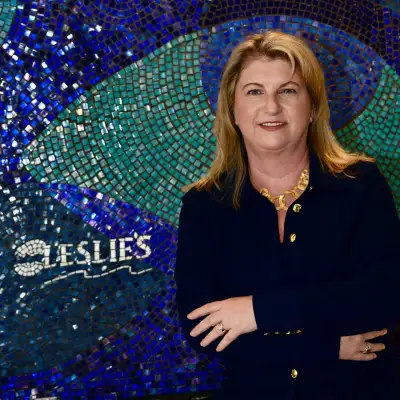
Coaching, Mentoring and Promoting from Within ft. Maryann Byrdak
Okay.
Maryann Byrdak:Okay. I know there was an introduction before, but I'll start again. So Mary Ann Burdek. I'm the chief information officer for Leslie Pools. I've been in this role for seven.
Maryann Byrdak:This is my eighth month now. Moved to the Valley from Chicago. Been in Chicago thirty plus years. My entire career span was in Chicago, and the last eleven plus years of my career I've been CIO. It's my third organization.
Maryann Byrdak:With that comes a lot of wealth of information in terms of how I got here. I know that's the question on the table. So mentoring, coaching, and promoting from within is a topic near and dear to my heart, and I'm gonna start with my story as to why it's important to me personally and why it's important to me as I build and grow teams that I've done throughout my career, and what I really encourage and talk about these types of opportunities. So thank you for having me here, first and foremost. My career started through a high school counselor.
Maryann Byrdak:I had no idea what I wanted to do. I wasn't like my son who wanted to program at four because he watched me do it. But I was a junior, walked into a counselor's office in high school and said, I have no idea. Love math, love sciences. I do not want to be a teacher.
Maryann Byrdak:That was my simple statement. Said try a computer science class, try a basic programming class. Fell in love and didn't even know that there was such a thing as a computer science degree and a career that I could thrive in. And that's where my whole career started, with just that coaching and mentoring session of understanding and trying different classes and moving from there. Got my computer science degree and started as a programmer.
Maryann Byrdak:To the points you're asking which path we all took to get to where we are or what our backgrounds are, I was a programmer, DBA, Unix administrator. So I started in a variety of areas of technology, but programming and software development was my core competency. That's what I loved. I loved designing solutions to solve business problems. Changed roles throughout my career, but really continued the path of development and solving business process problems.
Maryann Byrdak:And reached a point in my career where I was working on my MBA, finished my MBA, and then decided, well, you know, I don't want to be a coder forever. How do I get into management? Looked at opportunities within an organization that I was at already. And a female leader took a chance on me and gave me my first opportunity, and first opportunity was leading a help desk. It's very important that I point that out because you'll see how that pivots into some of what I encourage and some of what I've done is to coach and mentor resources within the help desk teams.
Maryann Byrdak:If you think about that in your help desk teams and your past, you might have been on the help desk. Many IT people start their careers there. I don't think you wake up and say, I want to be a level one help desk analyst for the rest of my life. That is definitely not the case. The truth is that that's what they know and somebody opened their door or they didn't have a computer science degree so that's a way into IT, is to start at the help desk.
Maryann Byrdak:And from there, someone needed to help them coach and mentor them or found that they have the capacity to move on. So I found that that's the best talent you have within your organization, the best place to start coaching and mentoring your team members and growing from within resources that already are part of your culture, understand your business, understand the hardest part of the job is responding to customer complaints and solving them, is to coach and mentor those resources and to ask them simple questions. What of these tickets excite you the most? Which ones do you love solving? And which ones you hate?
Maryann Byrdak:Right? There's definitely those. What are you curious about? What do you like to do in your spare time? What interests do you have?
Maryann Byrdak:Those are the types of opportunities that I've taken the time and spent time with many of my various help desks that I've managed, not just my first help desk job that I managed, oh my goodness, that was in I won't say how long ago, very long time ago. To my last few CIO roles where help desk has been part of my organization, where I've asked those questions. I've asked the curiosity questions and then figured out what training classes to offer. Who to partner them with within the organization to shadow, Right? Because you don't see and you don't know, you can't be, right?
Maryann Byrdak:Just like women in IT, we have the glass ceiling. There's, you know, until probably a decade ago I never met a female CIO, I didn't have the opportunity until I was higher up in leadership ranks where I've met female CIOs. So it's giving that opportunity for those resources to meet with someone within your team, spend time with them so that they can coach and be coached and mentored and understand if that's what they want to do. Provide training. Simple Microsoft Nuggets, anything, right?
Maryann Byrdak:It doesn't have to be elaborate conferences and training. There's simple online training. There's so much information. The problem right now is there is so much information that not everyone knows how to navigate it. So help them navigate what training to take, provide the opportunity, give them the time to take those classes.
Maryann Byrdak:So that's an important part of the journey. Have a few examples throughout my career. I had a young man in one of my help desks who thrived on the networking tickets. Hated anything else. So took some network engineer certifications and he was a network engineer for my last two organizations.
Maryann Byrdak:Mentioned here earlier that I just moved to the valley here and I am still building out my network, but in Chicago I had a great network of resources that moved from organization to organization to continue to work with me and I really valued that. Another young man in one of my past help desks, and especially during COVID it was tough, right, to help your resources grow and to help them figure out what they need to do. So, you know, I asked him what you're curious about, had him shadow our cyber resource, took some cyber certification, and now works on the cyber team. Within that team, it was great to see the smile on his face and when he got promoted to that cyber engineer role that he was thriving. He found his home.
Maryann Byrdak:We all have that. We don't end our computer science degrees and we know exactly where we're going to end up, what type of industry we're going to end up, especially back now the degrees are a little more specialized, but there were really two degrees, right, back when we were going through computer science classes. So you didn't know what industry you're going to end up, what your specialty was going to be. So for me it was those coaches and mentors throughout my career that helped me figure out where I wanted to do. I had some great mentors in my retail.
Maryann Byrdak:I'm back in retail. I had a little break chapter in between to really help me figure out where I wanted to and running point of sale was my core competency. I still love it, I'm back in retail now. And making sure that something that needs to be operational, not just for our end customers but for our internal customers, was something I was very passionate about and still am. Because it needs to solve two sides of the equation.
Maryann Byrdak:It needs to work well for both customers, internal and external. So I love solving those puzzles, love implementing and optimizing those solutions. But there was a head of operations in one of my retail and he's like, you know, this is what you should do next. You should run the point of sale team. Like, that's for a, you know, at that point a Fortune 10 company.
Maryann Byrdak:That was a daunting task for me and I took that on, navigated the role of prioritizing requirements from various business groups to funnel into a point of sale system that was deployed across 2,000 locations, 55,000 registers. It was challenging, but I was up for the challenge. But he was with me every step of the way. Every day there was an afternoon coffee break and we sat down and here's what we should do next, here's how you should do it. So it's important to find those moments and find those opportunities to find mentors and be a mentor.
Maryann Byrdak:I still do. I mean, no matter where you are in your career, you're not the smartest person in the room. Don't ever kid myself that I am, so I still need mentorship and coaching. But I know that I have to give back, so spending time and being a mentor is very important to me. Today's world of AI is changing the face of how we're doing that and what we're recommending.
Maryann Byrdak:That crystal ball is not as long and deep as it was before. We don't know what the footprint of technology looks like five years from now. Two years ago things really changed on us. We talked earlier about being AI pessimists, optimists, realists. And I'm probably more in the somewhere in between mark when it comes to investing in modern technologies and really turning around your environment and how fast or how slow, but then the realist in me says You have to bring your team along on the journey.
Maryann Byrdak:What tools, what risks are for the organization, when do you step back? So when my team members ask me, How fast are we going to go? Or How quickly we're going to turn on some AI tools. I'm like, well, we have to put the basics in place first. Challenge to say what software will not be in our portfolio three, five years from now.
Maryann Byrdak:We don't know that. We don't all know that. But we need to solve the business problems of today and tomorrow. So when coaching and mentoring new resources, in this new world, my recommendation is be curious. Learn, try things on your own.
Maryann Byrdak:I was telling an example over the weekend I was theorizing on one topic that someone challenged me on Friday night and I spent the weekend on ChatGPT and other AI tools just being curious about AI's opinion on an AI topic, which proved the person on Friday night wrong, but it was interesting that AI was an AI pessimist in responding to the challenge I proposed. But I was curious enough to spend the time to do that because I was challenging myself on what the answer was. So be curious, you know, have these debates, healthy debates within your teams. You have to learn together. This is no longer one person has the right answer.
Maryann Byrdak:This world is changing so fast that we have to be at the table together, having the conversations, having the debates, leaning on experts. You talked about the three experts at your table and who are those resources that you reach out to, who do you lean on. Probably need more than three these days, But it's important to have those allies and experts and collaborate. Work with your business teams on that. But again, don't forget that we're debating these things up top.
Maryann Byrdak:Our help desk resources are scared they're going to be out of a job. Our call center resources are other types of resources. Our programmers are scared they're not going to have jobs. It's our job to help them figure out what's next. So we need to spend the time to provide them the tools, provide them training, and to help them navigate this new world.
Maryann Byrdak:There's no crystal ball. I think I'm going to end it with that and say questions.
Audience:Do you tend to hire from within first?
Maryann Byrdak:I do look internally and definitely I'm promoted even here. Went through a resource evaluation and, you know, a couple resources promoting from within or moving resources around and then augmenting where I need to with hiring. But it's important to know your team before you bring in resources. Know know what you have and what resources you can bring up.
Audience:How big is your team, Diane?
Maryann Byrdak:I have about 50 in seat and about, oh, a few dozen outsourced. So we do have a large outsourced organization.
Maryann Byrdak:I'm curious, I enjoyed your talk, and how have you learned over the years to build your team? I always say you're always good as your team, right? Yep. All the way to the help desk, right? And they're the ones that are really dealing with your customers or clients, so any tips on how you would
Maryann Byrdak:Yeah. Spend the time in the interview cycle, right? So when you're hiring, when you're building out a team, ask a lot of questions. I've now been coaching and mentoring my leaders to ask the right questions during interviews, because you have to not just interview for curiosity and technical skills, but culture fit and where we're going from a strategic roadmap perspective so that they're you're hiring for the skills or curiosity of the future. As, you know, we just talked about the changing evolution, you need to hire the right resources that are curious enough to learn alongside the team and with the team as we change and pivot.
Maryann Byrdak:So that's important. Then within the team, building out those skills and providing, those coaching, mentoring, and being careful on what we're outsourcing and not. That's something that I've always paid attention to is that you don't want to outsource all the keys to your kingdom. You need the resources, especially the ones that are collaborating with your business partners to be internal, to have that subject matter experts, the debate group internal. And then the fire drill team, right?
Maryann Byrdak:You know, the weekend fire drill team, when you're, you know, many of us have outsourced teams, when you're waiting for teams from all over the world to join a call, that issue is impacting the business hour by hour. So be careful when you're building teams as to what you're keeping inside and what you're outsourcing so that you're not personally, like personally spending time on these calls just waiting and being frustrated. So building the teams on where you need to be responsive to your business needs, where you need to listen and translate, that's where I've spent a lot of time in making sure that those are internal resources. I'm at the seat at the table. I report to the CEO, so that's very important that we're a thought partner, we're an enabler, we support the business strategy, and we know that pretty much there's no initiative that doesn't involve IT in today's world of technology and change.
Maryann Byrdak:So I have great support from my leadership team. I've had in my past as well. But it's again, you have to prove yourself that your trust goes both ways. So that's you have to earn it as well.
Audience:So do you think that your team understands your role in growth of
Audience:your organization and how they
Audience:are supporting that through IT?
Maryann Byrdak:Transparency is key. So we review our portfolio, where we're going, what's next. It's all about transparency. We've, in my last several months, reviewed architecture, where we are and where we want to go and where we need to enable the business to go faster. So that's very important to me is not have silo teams and bringing even the adjacent business groups that are supporting analytics or other areas together into that conversation.
Audience:Did you back fill a prior CIO position, or is this a new position within the company?
Maryann Byrdak:There was a previous CIO that ran marketing and IT, which with not an IT background. So it's a new individual CIO role. Yes.
Audience:Lots to clean up when you came in there.
Maryann Byrdak:To clean up or still to? There's some legacy that we have. It's an older organization. Right? We all have legacy, we're not all start ups.
Maryann Byrdak:So there's definitely legacy to clean up, foundational things to improve upon.
Audience:My biggest challenges I found is overcoming the bias of everybody from an established organization and kind of shepherding them to new ways of thinking realistically, pragmatically, not over the moon, but also trying to take the pessimists and handhold them or boot them out the door when needed.
Maryann Byrdak:Or say end of life is a real thing. Yep. Uh-oh. So we we just have to sometimes and we can't innovate. We can't do some of these new things if we have so much legacy in place.
Maryann Byrdak:And and that's that's key.
Maryann Byrdak:That was my follow on. How do you handle innovation? Again,
Maryann Byrdak:sequencing and some things can be done in parallel, some have to be sequenced, so road mapping things is important.
Audience:Do you think hiring is more difficult than in the past?
Maryann Byrdak:I want to
Maryann Byrdak:say here in the Valley, I don't want nothing against the resources here, but I've had a harder time than in Chicago. But I was in Chicago for thirty plus years, so I had a network. So here I'm leaning on, again, signing up for events like this, selfishly taking the opportunity to meet leaders and to meet peers in the network and to not just shamelessly steal from them, but to say who's available, who's looking.
Audience:As a native to Arizona, I've been in tech my entire life, I've stayed very hard on the hiring for tech. Mhmm. So the faster you build your network, the better off it is in their
Maryann Byrdak:area. Yes. Or convince people from Chicago to move. Not in August, right? I have to wait till November.
Maryann Byrdak:If I didn't do it in the spring, now I have to wait till fall. I moved in January. I don't know, if it was in August, maybe different story.
Audience:Which other groups have you found most valuable in the short time that you've been here? You mentioned a couple when we were talking about other groups.
Maryann Byrdak:Yeah. I mean, Sim is a great connector. I was part of Sim, Inspire, HMG. I was on the board of most of those back in Chicago, so it was a handover. He joined the Phoenix chapter.
Maryann Byrdak:So it was great because it was an easy introduction, eased into these organizations. And then as a new CIO in the Valley, people are introducing themselves to me, so I'm privileged to have that opportunity to meet a lot of great leaders and resources and partners. So it's great. It's been is a very social embracing group here that I thought it was small, but it isn't. I'm surprised I've gone to some of these HMG, the larger events, and there's a great community here.
Maryann Byrdak:So I'm excited for what that brings in building out a team and being able to network and obviously improve the the tech footprint of the Valley.
Audience:Back on the innovation topic, have you implemented any AI tools on your team? And I guess how's the engagement been or how should you drive that engagement?
Maryann Byrdak:Well, I'll talk about from my last life. Implemented a AI agent that won national awards, and actually my team was able to go and ring the bell in the NASDAQ a couple weeks ago. I was a Chicago Innovation Award winner and a National Award winner for donating food. My last CIO role was CIO of Feeding America, for those that didn't know that. And so it's an app that allows any restaurant, retailer, grocer to donate food and the learning in the middle is translating that data to where the product can be used and sourced to.
Maryann Byrdak:So it's a very rewarding adventure and innovative technology for social good. And yes, adoption, there's PR and other things, but like every tool, right, it takes time. Just like it took us all a while to trust that chat bot can change your airline reservations, right? And when was the last time you wanted to actually talk to an agent when you needed to change your flight when you're stuck at the airport? I I don't.
Maryann Byrdak:I I use the chatbot.
Maryann Byrdak:Yeah. Just one other follow on. You mentioned outsourcing. I agree, you know, from my own perspective, core competency, wanna keep in house. But how do you go about these decisions on outsource, you know, versus buy and outsource decisions?
Maryann Byrdak:What's your thinking?
Maryann Byrdak:There's commodity services and then there's peaks and valleys, right? So initiative based work where you might not need that large of a team to sustain, that's typically something you use outsourced services for augmentation services for. And then, you know, there's coding and other service type tasks, monitoring at night when you don't want to try to find someone on your team that will be 20 fourseven or build out a team twenty fourseven, seven days a week. We're a retailer, right? We run all the time.
Maryann Byrdak:So that you need to augment some of those layers. So it's finding where you don't want to spend the time to hire for something that you can train for easily or augment more easily that you don't need permanently. So you start there, typically. Then there's cost, right? Development cost, engineering resources, testing, those types of resources are you know, there's a cost component to that.
Maryann Byrdak:So it's a balance. I don't know that there's a silver. Today's world is changing, right, with new modern tools. It will continue to evolve in how we make these decisions and how much of that you train your team. But that's where the next few years will teach us how to train your team and convert your team to use more of these modern technologies and how much we move away from packaged software or not.
Maryann Byrdak:Right? That's still the big pendulum debate.
Maryann Byrdak:You hit everyone that I could think of except you hit it at the end there. So new technologies Mhmm. I would usually bring somebody in first if your Yep. Current team doesn't have the skills and then kind of partner or partner them with one of your current team with Yep. Some of the people
Maryann Byrdak:you Yeah. Shadow, teach, take advantage of that SOW contract, right, to teach your team, yes.
Maryann Byrdak:Okay. I like this perspective. Any
Audience:final questions? It sounds like in your current situation you're kind of at a situation where IT is now really getting a full seat at the table. Right? Like, IT is more driving some initiatives rather than, like, a marketing person overseeing IT. I'm kind of similar where IT is now being brought forth in the business.
Audience:Any tips, advice navigating that cultural change?
Maryann Byrdak:We have a full most of our leadership is newer, so this is what they're accustomed to. I don't think there's new. So it's not a DNA change that's needed. We're all aligned on what we need to do from a strategic priority perspective and it's just everyone has a different role to play in that, and mine is IT. So now having a dedicated resource to focus on IT.
Audience:Maryann, thank you.
Maryann Byrdak:Thank you.
Audience:I appreciate every one of you being here. Please tell your friends and your coworkers about this event. We want to grow it as time goes on. We hope to have Mary Anne as well as Joe Foose for the November event, November 20. And I I think there's a good chance we'll move to the University of Phoenix in 2026, so we'll be a little bit more central for many of you.
Audience:Thank you. Jacob and Howard and David will help you get out of the building. Appreciate you spending time with us this morning. Thanks.
Maryann Byrdak:Thank you. Thank you.
Audience:Thank you very much to meet you today, doctor.
Audience:Nice to meet you.
Creators and Guests